01
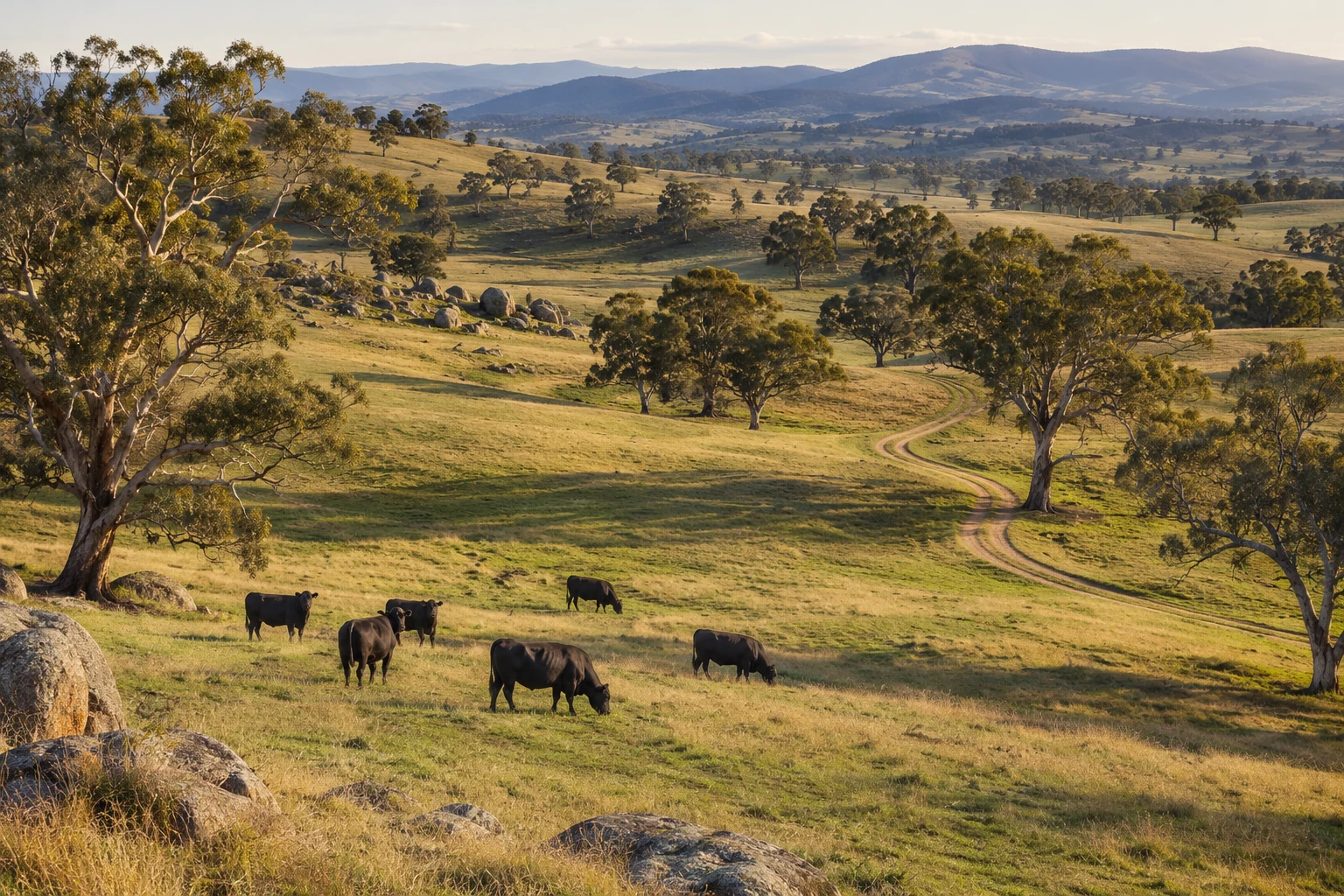
Follow the animal.
Individual records matched by EID, with weights, mobs, movements and management history. Keep the animal in view as its records grow.
EID · weights · mobs · movementsGROUNDED IN YOUR FARM
Your livestock. Your paddocks. Your bottom line.
Bring the records together, understand the patterns, and see where to focus next.

01 / THE CONNECTED FARM
Which cattle are performing? How hard is a paddock being grazed? What is each hectare contributing? Paddock Insights connects the records behind the questions.
Individual records matched by EID, with weights, mobs, movements and management history. Keep the animal in view as its records grow.
EID · weights · mobs · movementsTrack grazing across a single paddock or several open gates. See DSE per hectare and grazing days against the area stock can actually access.
Shared grazing · DSE · grazing areaPut liveweight sold, recorded costs and gross margins alongside performance per head and per hectare. Compare groups and ask better questions.
kg sold/ha · margins · comparisonsBring local weather, feed availability, paddock observations and AgFlight evidence into the picture. Understand what else was happening.
Rainfall · feeds · maps · observations02 / GRAZING, AS IT HAPPENS
When a mob can roam across several paddocks, its grazing area changes. Count the stock once across the paddocks they can access.
Try an illustrative example
Select at least one paddock to calculate grazing pressure.
This is an illustrative calculation, not actual farm data or a product screenshot. The DSE factor is an example; actual requirements vary with stock class and conditions. Tree cover needs a grazing review.
DSE means dry sheep equivalent: a common way to express livestock feed demand. This example uses a fixed 10 DSE per head.
DSE/ha = head × DSE per head ÷ accessible hectares. DSE-days/ha = head × DSE per head × days grazed ÷ accessible hectares.
Reviewed grazing area uses example estimates of 34 ha for Creek, 26 ha for Ridge and 40 ha for Home. These areas total 100 ha compared with 120 ha inside the boundaries. The mob is counted once across the selected paddocks; the example does not assume it grazes each paddock equally or estimate days of feed remaining.
03 / LESS RE-ENTERING. MORE UNDERSTANDING.
Farm information comes from plenty of places. Bring existing files and field observations into a consistent history you can actually use.
 Paddock InsightsOne connected farm history.
Imports depend on the records available from your provider. Review your data before adding it.
THE BOSS COCKY SOFTWARE FAMILY
AgFlight brings the spatial picture: imagery, zones and targeted sampling. Paddock Insights brings the livestock, records and performance context. Import the evidence to connect the two.
Explore AgFlightPaddock InsightsSEE THE WHOLE FARM.A FEW PRACTICAL QUESTIONS
Paddock Insights is in active development, with farm workflows being tested and refined.
Yes. The current platform is a web app that opens in a mobile browser and can be added to your home screen. Open it online first to prepare the supported offline records. Online services, including AI label reading, still need a connection. Availability in the Apple App Store or Google Play has not been announced.
Record which paddocks are connected and when. Paddock Insights treats the accessible area as a shared grazing area and counts the stock once. DSE per hectare and grazing history use the selected area, rather than counting the same mob in every paddock.
You can review and map CSV exports, import named paddock shapefiles, and bring in supported AgFlight files. Useful records may come from systems such as AgriWebb, Gallagher, Optiweigh, Agworld, Halter and eShepherd, depending on the export fields available. Listing a system here does not imply a partnership or a live automatic connection. Direct integrations require provider access and validation.
Tree cover is a starting point for an estimate. Review the vegetation or open-pasture layer and allow for the grazing that actually occurs under trees. You can retain both total boundary hectares and a reviewed grazing-area estimate; a tree map alone does not measure pasture supply.
No certification is claimed. Livestock assurance record keeping and audit exports are being developed to help organise your evidence. Producers remain responsible for meeting the requirements that apply to their operation. These tools do not replace official NVD or NLIS processes.
The working app is currently available by invitation. Invited users sign in with their own ChatGPT account and get a private farm workspace. Use “Log in” to open your account. Public subscriptions and pricing have not been announced. Shared access for staff and advisers to the same farm is not yet available.
No. The paddocks, stock numbers and DSE factor in this website’s example are illustrative. The calculation demonstrates how accessible area changes stocking pressure. It is not a recommended stocking rate. In the platform, kilograms sold refers to recorded liveweight; gross margin is revenue and inventory change less recorded variable costs, rather than net profit.
YOUR NEXT DECISION STARTS WITH A CLEARER PICTURE.
App access is currently limited to authorised users.